Sleeping Bee on Daisy: Merch Design Review
As a professional embroidery designer specializing in commercial branding and small business merchandise, I approach every new machine embroidery design with a critical eye toward production viability. When evaluating the Sleeping Bee on Daisy Embroidery Design for potential use in branded apparel or retail products, my primary focus is not just aesthetic appeal, but technical performance across various substrates. This review analyzes how this specific motif translates from a digital file to a tangible asset for cafes, florists, boutiques, and handmade brands.
Visual Personality and Brand Alignment
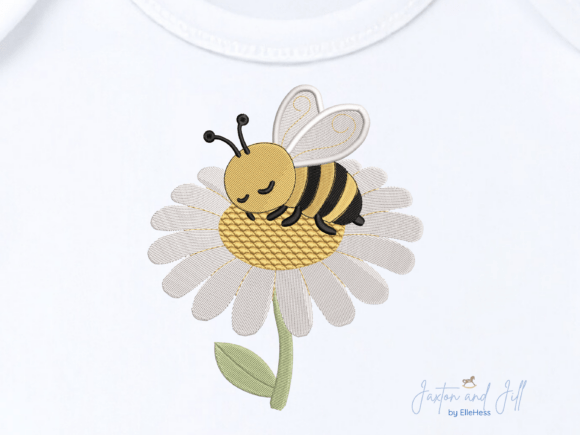
The first impression of the Sleeping Bee on Daisy Embroidery Design is undeniably soft, peaceful, and approachable. For businesses in the wellness, floral, bakery, or children’s product sectors, this visual tone is strategic. The description highlights smooth satin stitching and delicate text, which suggests a refined finish rather than a dense, bulletproof patch style. This matters significantly for brand identity. A sleeping bee conveys gentleness and care, making it an excellent candidate for businesses that want to project warmth over corporate rigidity.
However, "delicate" requires careful handling in a commercial setting. While the design fits perfectly on a handmade product tag or a boutique tote, it may lack the boldness required for high-visibility workwear or outdoor signage. As a designer, I see this as a premium accent graphic rather than a primary logo replacement. It works best when paired with clean, sans-serif typography or used as a secondary mark on sleeve cuffs, pocket corners, or packaging seals.
Evaluating Technical Performance for Production
For any embroidery file intended for business use, stitch structure dictates longevity. The mention of satin stitching in the Sleeping Bee on Daisy Embroidery Design indicates a reliance on sheen and smooth coverage. Satin stitches are beautiful but can be vulnerable to snagging if the column width is too wide or if the underlay is insufficient. Before running a full production batch for custom apparel, you must verify the underlay structure. Proper center-run or edge-run underlay is non-negotiable to prevent the satin columns from sinking into textured fabrics like canvas totes or pique polo shirts.
Furthermore, the inclusion of delicate text presents a specific challenge for commercial embroidery. Small lettering often fails when scaled down for caps or left-chest placements. If the text elements in this design are thinner than 4mm or rely solely on satin stitches without adequate spacing, they risk becoming illegible after washing. I recommend testing the stitch density specifically on the text portions. If the letters merge, you may need to edit the file to increase spacing or switch to a running stitch font for sizes below two inches.
Strategic Applications for Small Business Merch
This design offers versatile applications for specific niches within the small business merch ecosystem. Based on its peaceful aesthetic and technical attributes, here is where the Sleeping Bee on Daisy Embroidery Design performs best:
- Florist and Garden Center Uniforms: The botanical theme aligns naturally with the industry. Use it as a subtle apron embroidery placement on the bib or lower pocket to reinforce the nature-focused brand message without overwhelming staff attire.
- Bakery and Cafe Branding: The "sleeping" aspect evokes comfort and rest. This makes it ideal for coffee shop merchandise like linen napkins, tea towels, or reusable cup sleeves where a cozy atmosphere is paramount.
- Etsy Seller Packaging: For sellers of jewelry, candles, or stationery, this design serves as a high-value unboxing element. Stitching it onto muslin drawstring bags or felt pouches elevates the perceived value of the finished product.
- Pet Grooming and Boutique: The gentle bug imagery appeals to pet owners who view their animals as family. It works well on bandanas or grooming smocks where aggressive logos might feel out of place.
Critical Considerations for Caps and Patches
While versatile, the Sleeping Bee on Daisy Embroidery Design requires caution when applied to curved surfaces or standalone patches. Cap embroidery demands designs that accommodate the curve of the bill and the seam of the crown. Delicate satin stitches and fine text can distort on a cap front unless the digitizer has included specific compensation for the cylindrical shape. Always request a sew-out sample on an actual cap before committing to a bulk order.
Regarding embroidered patch production, the "delicate" nature of this design is a double-edged sword. Traditional merrowed-edge patches require a sturdy border and sufficient internal density to support the cutting process. If this design relies heavily on open space or thin lines, it may not survive the merrowing process intact. For this specific motif, I would recommend a laser-cut felt patch or a woven label alternative if the stitch count is too low for a traditional embroidered badge. Always check the minimum size recommendations; reducing a complex floral-and-bug composition to a 2-inch patch often results in lost detail.
Designer Notes: Pre-Production Checklist
To ensure the Sleeping Bee on Daisy Embroidery Design meets professional standards, follow this validation protocol before selling or distributing branded goods:
- Verify Licensing: Confirm that the digital embroidery file includes commercial usage rights. Personal licenses do not cover selling items with the design or using it for business branding.
- Test on Target Fabric: Never assume a file will run identically on denim, twill, and knit. The fabric texture dramatically affects satin stitch appearance. Run a test on the exact garment you intend to sell.
- Stabilizer Selection: Delicate designs on stretchy fabrics require cut-away stabilizer to maintain registration. Using tear-away on a jersey knit t-shirt could cause the daisy petals to gap or the bee to shift during wear.
- Check Hoop Size Compatibility: Ensure your machine’s smallest hoop can accommodate the design without excessive empty space, which leads to flagging and misalignment. Verify the physical dimensions against your equipment limits.
- Create a Printable Mockup: Before stitching, overlay the design on a photo of the merchandise to visualize scale and placement. This helps clients approve the concept and prevents costly re-hooping errors.
- Thread Color Contrast: Test the design in grayscale. If the bee disappears against the daisy in black and white, the contrast is insufficient for dark uniforms. You may need to adjust thread colors or add an outline to ensure visibility on navy or black garments.
Impact on Customer Trust and Product Value
Ultimately, the decision to use the Sleeping Bee on Daisy Embroidery Design should be driven by its ability to enhance customer trust. High-quality embroidery signals attention to detail. When a customer sees crisp satin stitches and legible text on a tote bag design or uniform, they subconsciously attribute that same care to the business's core services. Conversely, puckered fabric or thread breaks suggest negligence.
This design, with its inherent softness and spring-like quality, offers a unique opportunity to differentiate from generic clip-art branding. By treating it as a professional asset—testing its limits, respecting its technical requirements, and placing it strategically—you transform a simple bug motif into a powerful component of your design assets library. Whether used for a seasonal promotion or a permanent staff uniform, proper execution ensures this adorable bumblebee delivers both charm and commercial reliability.